Introduction
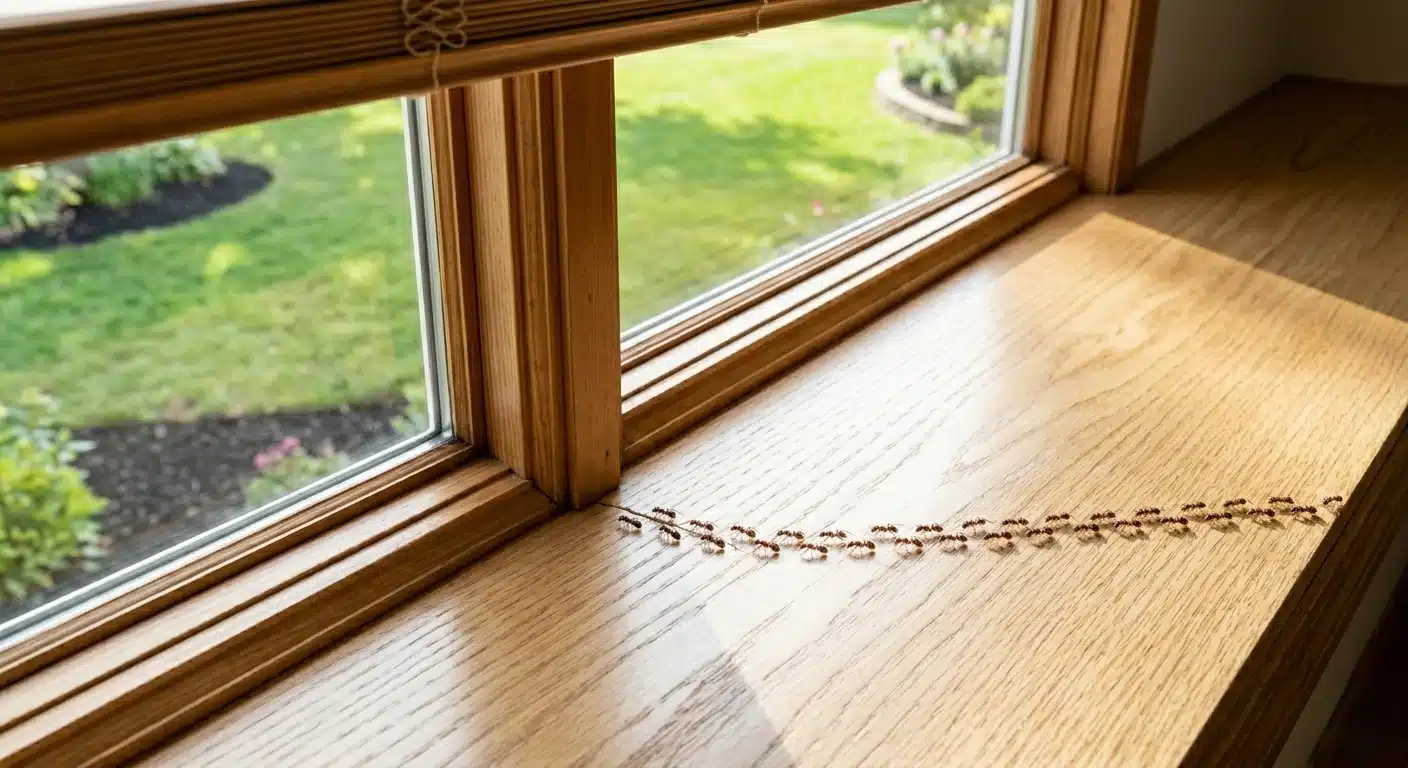
If you’ve ever walked into your kitchen and noticed a trail of ants moving across the counter or along the floor, your first thought is usually: “Why are ants coming into my house?”
Ants are one of the most common household pests in Central Ohio, especially during the warmer months. Homeowners in Columbus, Dublin, Powell, Westerville, and Delaware often begin noticing ants in kitchens, bathrooms, basements, or near windows in the spring and summer.
Ants enter homes for a simple reason they are searching for food, water, and shelter. Once a scout ant finds something valuable inside your home, it leaves a chemical trail that tells the rest of the colony exactly where to go.
Understanding what attracts ants to your house is the first step toward preventing infestations and keeping them from returning.
Need fast, reliable help? Our team is ready to assist you today.
Food Sources That Attract Ants
The most common reason ants enter homes is food. Ants are highly efficient foragers and can quickly locate even small crumbs or spills. Some of the most common food sources that attract ants include:
- Sugar or syrup
- Crumbs on floors or counters
- Pet food bowls
- Unsealed pantry items
- Sticky drink residue
- Fruit left on counters
Even tiny amounts of food can attract ants. Once they discover a reliable food source, they will repeatedly return and bring more workers with them. That’s why ants often appear in kitchens and dining areas first.
Moisture and Water Sources
Ants also need water to survive, which is why they frequently appear in areas with moisture. Common water sources that attract ants include:
- Leaky pipes
- Damp wood
- Condensation around windows
- Pet water bowls
- Bathroom sinks
- Basement humidity
Certain species, such as carpenter ants, are especially attracted to damp wood because it makes nesting easier. Homes in Central Ohio, where spring rain and humidity are common, can provide ideal conditions for moisture-seeking ants.
Entry Points Around Your Home
Ants can enter homes through extremely small openings. Common entry points include:
- Cracks in foundations
- Gaps around windows and doors
- Utility pipe openings
- Damaged weather stripping
- Spaces under siding
Because ants are so small, even tiny openings can provide access to your home. Once inside, scout ants begin searching for food and water sources.
Outdoor Conditions That Attract Ants
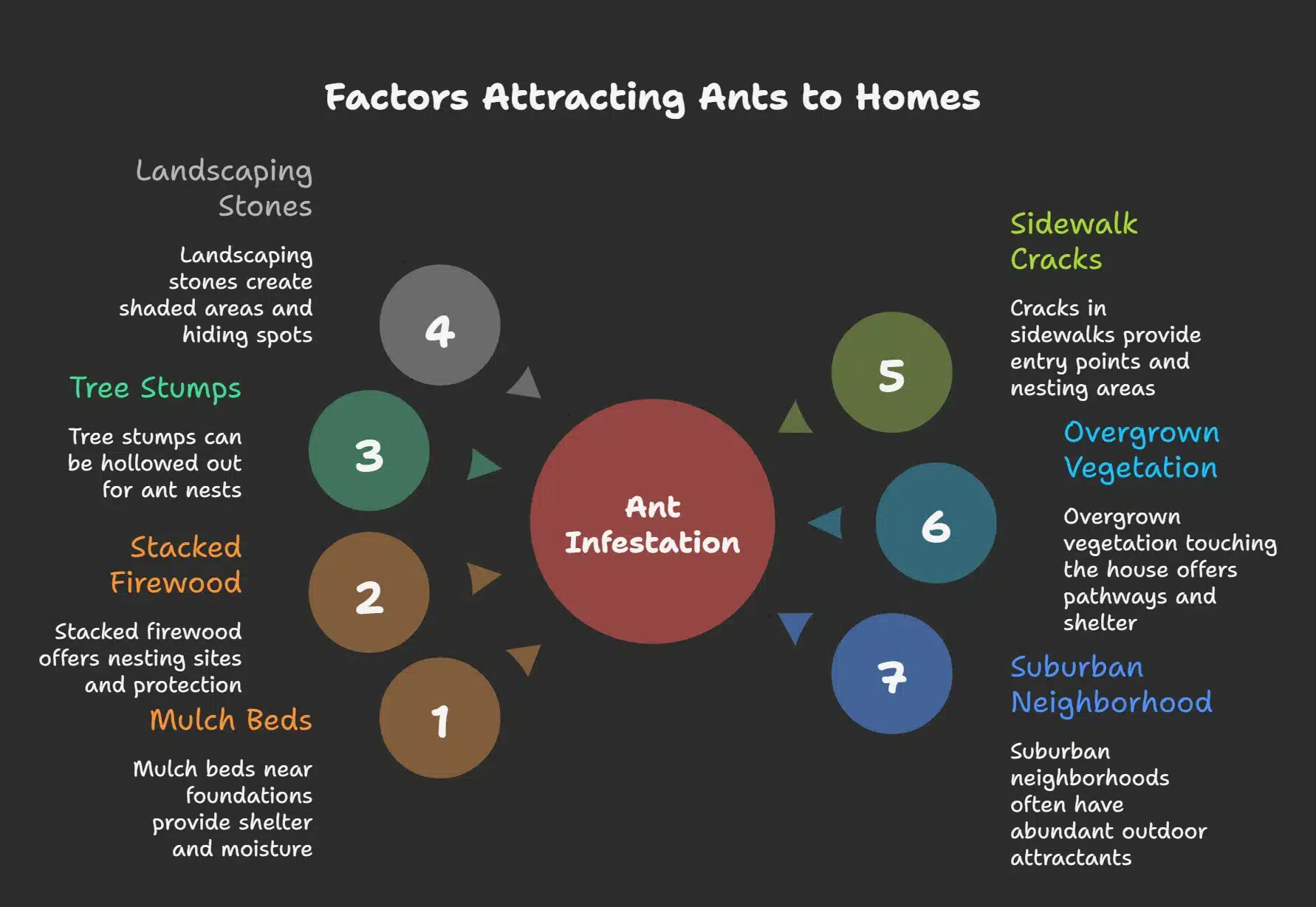
Many ant infestations actually begin outside the home. Landscaping and yard conditions can create ideal nesting environments that allow ants to move easily into nearby houses. Common outdoor attractants include:
- Mulch beds near foundations
- Stacked firewood
- Tree stumps
- Landscaping stones
- Cracks in sidewalks
- Overgrown vegetation touching the house
Suburban neighborhoods in areas like Dublin, Powell, and Westerville often contain landscaping features that provide perfect nesting locations for ant colonies. Once ants establish nests close to a home, they may begin searching indoors for food.
Need fast, reliable help? Our team is ready to assist you today.
Why Ants Often Appear Suddenly
Many homeowners feel like ants appear “overnight.” In reality, ants may have been exploring the home for days before becoming noticeable. The sudden increase in activity usually happens when:
- A scout ant finds food
- A strong pheromone trail forms
- More worker ants follow the trail
This is why ant infestations can seem to grow very quickly once they start.
Why DIY Ant Control Often Fails
Many homeowners try to eliminate ants using sprays, traps, or home remedies. While these methods may reduce the number of ants temporarily, they often fail to eliminate the colony itself. Common reasons DIY ant control fails include:
- Only visible ants are killed
- The nest remains active
- Multiple colonies exist nearby
- Baits are placed incorrectly
How to Prevent Ants from Entering Your Home
Preventing ants requires reducing the things that attract them. Helpful prevention steps include:
- Keep food sealed: Store pantry items in airtight containers and wipe down counters regularly.
- Clean crumbs and spills quickly: Even small food particles can attract ants.
- Fix moisture issues: Repair leaks and reduce humidity around sinks, basements, and bathrooms.
- Seal entry points: Use caulk to seal cracks around windows, doors, and foundations.
- Maintain landscaping: Trim plants away from the house and avoid placing mulch directly against the foundation.
When to Call a Professional Ant Control Company
If ants continue returning despite cleaning and prevention efforts, a nearby colony is likely established. Professional pest control focuses on locating the source of the infestation and applying targeted treatments that eliminate the colony.
For homeowners across Central Ohio, professional treatment can stop recurring infestations and prevent future problems.
Yard Pest Protection in Central Ohio
If ants keep appearing in your home, professional pest control can help eliminate the colony and protect your home long-term. Our team provides ant control services for homes throughout Central Ohio, including Columbus, Dublin, Powell, Westerville, and Delaware.
If DIY traps aren’t stopping the trails, Zuckerman’s Pest Management provides targeted treatments that address the root causes of ants in your house and eliminate the colony at its source.
Need fast, reliable help? Our team is ready to assist you today.
FAQs
What attracts ants the most?
Ants are most strongly attracted to food, water, and shelter. Sugary foods, crumbs, and moisture sources are common attractants.
Why do ants suddenly appear in my kitchen?
Ants often appear in kitchens because food crumbs and sugary residues provide easy sources of energy for worker ants.
Can ants live inside house walls?
Yes. Many ant species build nests inside wall voids where they are protected and close to food sources.
How do pest control companies stop ant infestations?
Professionals identify the species, locate nesting areas, and apply treatments designed to eliminate the entire colony.