
Introduction
When ants appear inside your home, the first instinct for many homeowners is to head to the store and pick up sprays, traps, or other DIY ant treatments.
Sometimes these products seem to work at first. The ants disappear for a few days, and it looks like the problem has been solved.
But then the ants come back.
For homeowners across Central Ohio — including Columbus, Dublin, Powell, Westerville, and Delaware — recurring ant infestations are extremely common, especially during the warmer months.
The reason is simple: most DIY ant control solutions only eliminate the ants you see, not the colony they came from.
To truly stop an infestation, the entire colony must be addressed. Understanding why DIY methods often fail can help homeowners find solutions that actually work.
Need fast, reliable help? Our team is ready to assist you today.

Why Homeowners Try DIY Ant Control
DIY pest control products are widely available and often marketed as quick and easy solutions.
Common store-bought treatments include:
- Ant sprays
- Ant bait traps
- Granular outdoor treatments
- Natural remedies such as vinegar or essential oils
These products can sometimes reduce visible ant activity temporarily, which makes them appealing for homeowners looking for a quick fix.
However, ant infestations are usually much more complex than they appear on the surface.
The Hidden Problem: Ant Colonies Are Much Larger Than They Appear
The ants you see in your home are typically worker ants that have been sent out from the colony to search for food and water.
A single colony can contain thousands of ants, with the queen producing new workers continuously.
Even if you eliminate dozens or hundreds of ants inside your home, the colony itself may remain completely unaffected.
As long as the colony remains active, it will continue sending new ants into your home.
Why Ant Sprays Often Make the Problem Worse
Sprays are one of the most common DIY treatments used by homeowners.
While sprays can kill ants on contact, they often fail to eliminate the colony and can sometimes make infestations harder to control.
This happens because:
- Sprays kill only the visible ants
- The colony quickly sends out new workers
- Ants may split into multiple colonies when disturbed
Some ant species respond to surface treatments by relocating their nests, which can spread the infestation further.
The Challenge of Hidden Ant Nests
Another reason DIY ant control fails is that ant nests are rarely easy to find.
Colonies can exist in locations such as:
- Inside wall voids
- Beneath floors
- Under concrete slabs
- In mulch beds
- Inside rotting wood
- Beneath landscaping stones
Because nests are often hidden, treating only the areas where ants are visible does not address the root of the problem.
Professional inspections are designed to locate these hidden nesting areas.
You can learn more about this process in our article:
How Pest Control Professionals Find Ant Nests in Your Home
Why Ant Baits Sometimes Fail
Ant bait products are designed to attract worker ants, which carry the bait back to the colony.
While this concept is effective when done correctly, many DIY bait products fail because:
- The wrong bait type is used for the species
- Baits are placed in the wrong location
- Ants are already feeding on other food sources
- Sprays are used nearby, preventing ants from reaching the bait
Ant species can have very different feeding preferences, which means one bait may work while another does not.
Professional pest control companies often use multiple bait types and strategic placement to improve effectiveness.
Need fast, reliable help? Our team is ready to assist you today.
Why Ants Keep Coming Back After DIY Treatments
When homeowners say their ant problem keeps returning, it is usually because the colony has not been eliminated.
Several factors contribute to recurring infestations:
- The main nest remains untreated
- Satellite colonies exist nearby
- Entry points into the home remain open
- Outdoor colonies continue sending foragers indoors
In many cases, homeowners may be treating symptoms rather than the cause of the infestation.
What Actually Works for Ant Control
Effective ant control focuses on eliminating the colony and preventing new infestations.
Professional pest control companies typically use a combination of strategies, including:
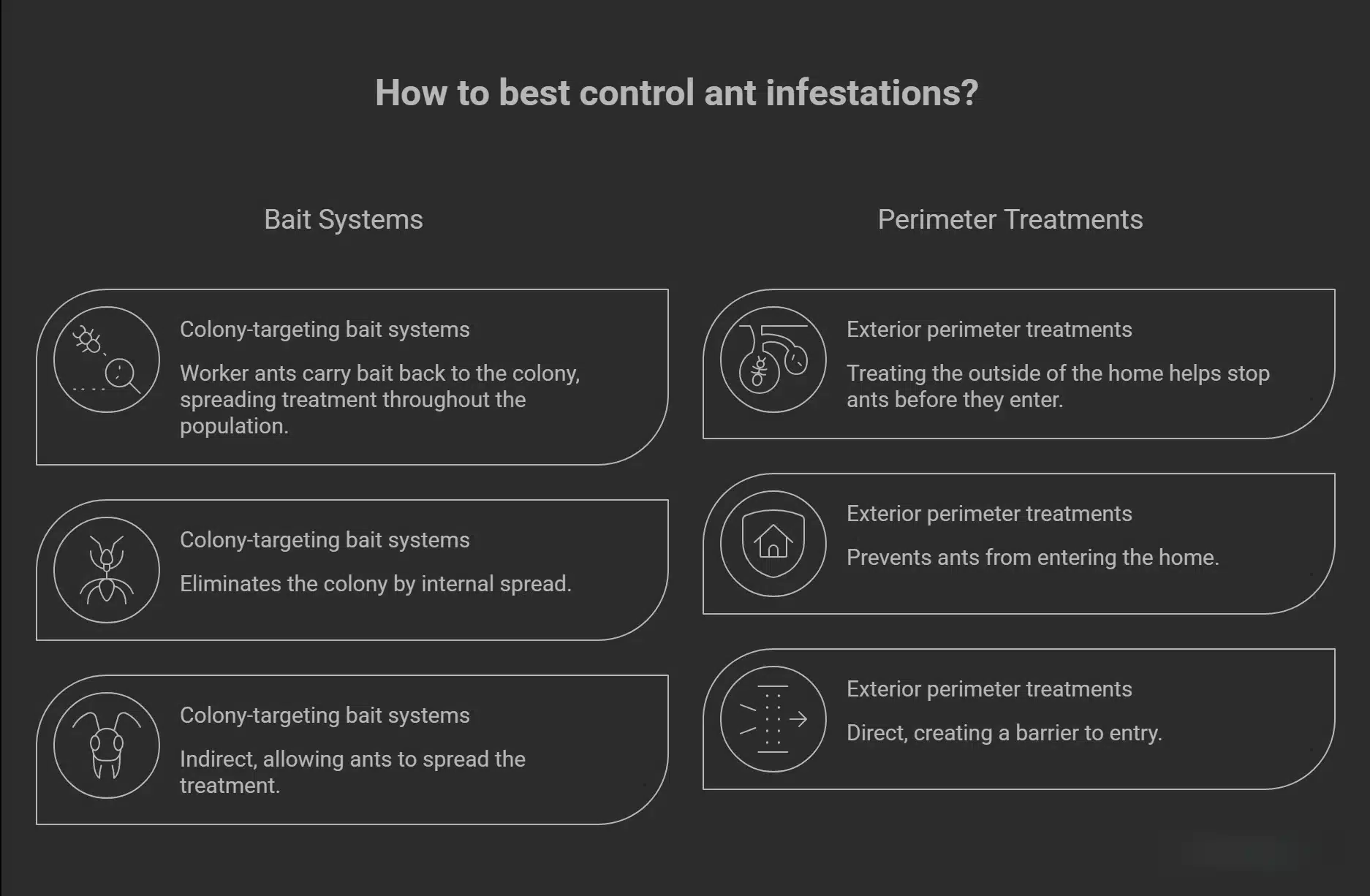
Colony-targeting bait systems
These treatments allow worker ants to carry bait back to the colony, which spreads the treatment throughout the population.
Exterior perimeter treatments
Treating the outside of the home helps stop ants before they enter.
Identifying and sealing entry points
Closing small gaps and cracks reduces access points for ants.
Targeted nest treatments
If the colony can be located, direct treatments may be applied to eliminate it.
This comprehensive approach addresses both current infestations and long-term prevention.
When to Call a Professional for Ant Control
If ants keep returning despite cleaning, traps, or sprays, a colony is likely established nearby.
Professional pest control can identify the species involved, locate nesting areas, and implement treatments designed to eliminate the entire colony.
For homeowners throughout Central Ohio, early intervention from Zuckerman’s Pest Management can prevent ant infestations from becoming larger problems later in the season.
Professional Ant Control in Central Ohio
If DIY treatments haven’t solved your ant problem, professional pest control can help.
Our team provides Ant Control services for homes throughout Central Ohio, including Columbus, Dublin, Powell, Westerville, and Delaware.
Learn more about our services here: ants
Need fast, reliable help? Our team is ready to assist you today.
FAQ
Why do ants keep coming back after spraying?
Sprays usually kill only the ants you see. If the colony remains active, new ants will continue entering your home.
Are ant bait traps effective?
Baits can work when the correct type is used and placed properly, but many DIY products fail due to improper placement or incorrect bait selection.
How long does it take to eliminate an ant infestation?
This depends on the size of the colony and the treatment method, but professional treatments often show results within a few days to a few weeks.
Is professional ant control better than DIY treatment?
Professional treatments are typically more effective because they focus on eliminating the colony itself rather than just killing visible ants.