There are few pests that can ruin an evening outdoors quite like mosquitoes.
Whether you’re enjoying dinner on the patio, watching your children play in the backyard, relaxing around a fire pit, or hosting a summer cookout, it often takes only a few persistent mosquitoes to send everyone back inside.
For many Central Ohio homeowners, mosquitoes aren’t just an occasional nuisance, they’re one of the biggest reasons outdoor spaces go unused during the warmest months of the year.
Fortunately, mosquitoes are also one of the most predictable pests we encounter.
Their life cycle depends almost entirely on water, temperature, and suitable resting habitat. Once you understand how mosquitoes develop and why they choose certain properties, it becomes much easier to reduce their numbers and enjoy your yard again.
At Zuckerman’s Pest Management, we believe effective mosquito management starts with education. While no treatment can eliminate every mosquito from the surrounding environment, understanding where mosquitoes breed, where they rest during the day, and what attracts them to your property allows homeowners to make informed decisions that significantly reduce mosquito activity.
This guide serves as the cornerstone of the Mosquitoes section within the Zuckerman’s Pest & Wildlife Learning Library. We’ll explain how mosquitoes develop, why some yards experience far more mosquito activity than others, the species commonly found in Central Ohio, and practical steps homeowners can take to reduce mosquito populations around their homes.
Need fast, reliable help? Our team is ready to assist you today.
Quick Facts About Mosquitoes in Ohio
| Topic | Information |
| Primary Activity Season | April through October |
| Peak Activity | May through September |
| Where Mosquitoes Breed | Standing water of almost any size |
| Most Active Times | Dawn, dusk, and overnight (varies by species) |
| Do All Mosquitoes Bite? | No. Only female mosquitoes bite because they require a blood meal to produce eggs. |
| How Far Do Mosquitoes Travel? | Many remain within a few hundred feet of where they hatch, although some species can travel much farther. |
| Professional Yard Protection Available? | Yes. Seasonal mosquito, flea, and tick treatments can be added to our PestProtect 365 Home program to help reduce mosquito activity around your outdoor living spaces. |
What Exactly Is a Mosquito?
Although most people think of mosquitoes simply as biting insects, they are actually highly specialized flies belonging to the family Culicidae.
More than 3,500 mosquito species have been identified worldwide, with approximately 60 species documented in Ohio. Fortunately, only a relatively small number commonly become nuisance pests around homes.
One of the most interesting facts about mosquitoes is that not every mosquito bites people. In fact:
- Male mosquitoes feed exclusively on plant nectar and other sugar sources.
- Female mosquitoes also feed on nectar but require a blood meal before producing eggs.
That blood meal provides the protein needed to develop the next generation of mosquitoes. Contrary to popular belief, mosquitoes aren’t biting because they’re aggressive. They’re simply completing a normal part of their life cycle.
Why Do Mosquitoes Need Standing Water?
If there’s one thing every homeowner should know about mosquitoes, it’s this: No standing water = dramatically fewer mosquitoes.
Unlike many insects that develop underground or inside nests, mosquitoes begin life in water. Even surprisingly small amounts can become breeding sites. Examples include:
- Bird baths
- Children’s toys
- Flowerpot saucers
- Clogged gutters
- Buckets
- Wheelbarrows
- Tarps
- Pet bowls
- Tree holes
- Old tires
- Decorative containers
- Poorly drained landscaping
Some mosquito species need only a bottle cap full of water to complete development. This is why eliminating standing water is one of the most effective mosquito prevention strategies available.
Why Are Some Yards Worse Than Others?
One of the questions we hear most often is: “Why do I have so many mosquitoes when my neighbor doesn’t?”
The answer usually comes down to habitat. Mosquitoes don’t randomly choose one property over another. They seek out places that provide everything they need to survive.
The ideal mosquito habitat typically includes:
- Standing water for breeding.
- Dense shrubs or ornamental landscaping for daytime resting.
- Shade and high humidity.
- Nearby wildlife and people for blood meals.
- Limited air movement.
Properties with mature landscaping, wooded borders, retention ponds, or nearby creeks often experience higher mosquito activity simply because the environment supports mosquito development. Likewise, a beautifully landscaped backyard with heavy vegetation may provide excellent daytime shelter, even if the mosquitoes are breeding somewhere nearby.
Mosquitoes Are More Than Just a Nuisance
Most homeowners think about mosquitoes because of their itchy bites, and understandably so. But mosquitoes are also important from a public health perspective because certain species are capable of transmitting diseases.
Fortunately, it’s important to keep this risk in perspective. The overwhelming majority of mosquito bites do not result in illness. However, because mosquitoes are known to transmit diseases such as West Nile virus, and public health agencies routinely monitor mosquito populations throughout Ohio, reducing unnecessary mosquito exposure remains an important part of protecting your family and enjoying your outdoor spaces.
Rather than creating fear, we believe homeowners should simply understand the importance of prevention and take practical steps to reduce mosquito activity where they spend the most time.
Common Mosquito Species Found in Central Ohio
More than 60 mosquito species have been documented in Ohio, but only a handful are responsible for most of the mosquito activity homeowners experience around their homes.
Different mosquito species prefer different breeding sites, feed at different times of day, and vary in how far they typically travel from where they hatch. While homeowners don’t need to identify every mosquito they encounter, understanding the most common groups helps explain why mosquito problems can vary so dramatically from one property to another.
Northern House Mosquito (Culex pipiens)
The Northern House Mosquito is one of the most common mosquito species found throughout Central Ohio and is well adapted to suburban and urban environments.
These mosquitoes frequently breed in artificial containers and standing water around homes, including:
- Clogged gutters
- Bird baths
- Rain barrels
- Buckets
- Decorative containers
- Abandoned tires
Northern House Mosquitoes are generally most active during the evening and nighttime hours. They are also one of the primary mosquito species monitored by public health officials because they can serve as vectors for West Nile virus. Fortunately, routine property maintenance and eliminating standing water can greatly reduce suitable breeding habitat around the home.
Asian Tiger Mosquito (Aedes albopictus)
One of the newest and most recognizable mosquitoes in Ohio is the Asian Tiger Mosquito.
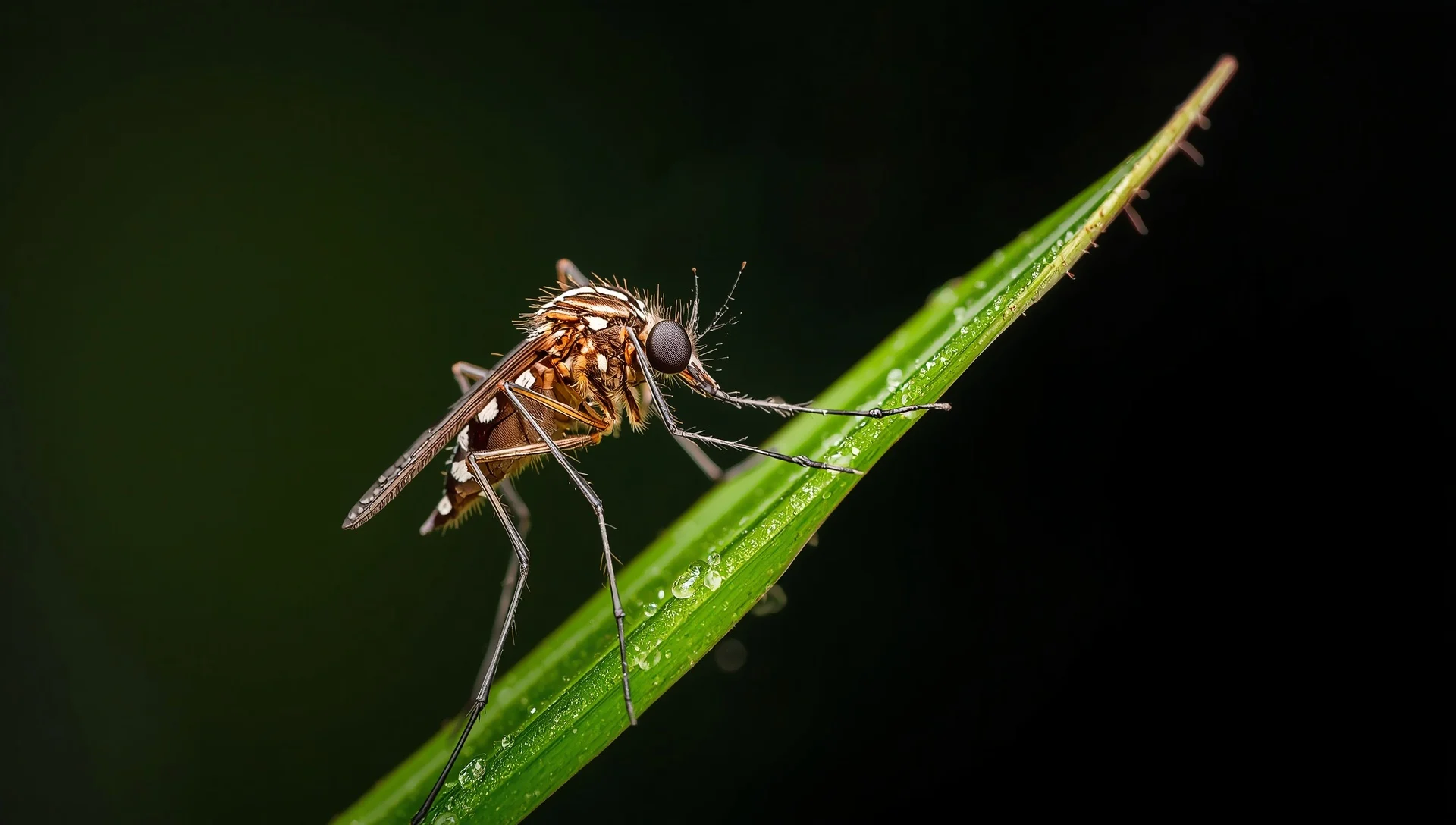
Unlike many native mosquito species, Asian Tiger Mosquitoes are aggressive daytime biters and are easily recognized by their striking black body with bright white stripes on the legs and a single white stripe running down the center of the thorax.
They commonly breed in very small containers holding water, including:
- Flowerpot saucers
- Children’s toys
- Buckets
- Tarps
- Pet bowls
- Decorative containers
- Tree holes
Because they often remain close to where they hatch, a property with numerous container breeding sites may produce large numbers of mosquitoes that spend their entire lives around the home.
Floodwater Mosquitoes
Floodwater mosquitoes are exactly what their name suggests. Heavy rainfall creates temporary pools of water that provide ideal conditions for eggs that may have been lying dormant for months, or even years, to hatch. This is one reason mosquito populations sometimes seem to “explode” after several days of rain.
Unlike container-breeding mosquitoes, floodwater mosquitoes often originate from:
- Low-lying fields
- Ditches
- Temporary puddles
- Retention areas
- Floodplains
- Wet meadows
Because many develop away from individual homes, completely eliminating them isn’t practical. However, reducing resting areas around your property can still make your yard much more comfortable.
Woodland Mosquitoes
Several mosquito species prefer wooded environments where shade, moisture, and abundant wildlife provide ideal conditions. Homes bordering forests, parks, creeks, and natural green spaces often experience higher mosquito pressure than neighborhoods surrounded by open lawns.
These mosquitoes commonly rest during the day beneath:
- Shrubs
- Dense landscaping
- Low tree branches
- Groundcover
- Tall ornamental grasses
This is one reason heavily landscaped yards sometimes experience more mosquito activity even when obvious breeding sites aren’t present.
Why Do Mosquitoes Bite Some People More Than Others?
It’s one of the most common questions homeowners ask: “Why do mosquitoes always bite me but leave everyone else alone?”
While it may seem like mosquitoes have favorites, there’s actually good science behind this observation. Mosquitoes locate hosts using a combination of cues, including:
Carbon Dioxide
Every time you breathe, you release carbon dioxide. Mosquitoes can detect these tiny plumes from surprising distances and use them to locate potential hosts. People who naturally produce more carbon dioxide, often larger adults or those engaged in physical activity, may attract more mosquitoes.
Body Heat
Mosquitoes are also attracted to body heat. After locating a person through carbon dioxide, they use heat to help pinpoint where to land.
Body Odor
Every person has a unique combination of bacteria living naturally on their skin. These bacteria produce odors that mosquitoes can detect. Research suggests that certain combinations of skin bacteria make some individuals naturally more attractive to mosquitoes than others.
Movement
Simply moving around outdoors makes you easier for mosquitoes to detect. Activities like gardening, mowing, exercising, or playing outside often increase mosquito encounters.
Clothing Color
Although it’s not the most important factor, mosquitoes appear to be more attracted to darker colors such as:
- Black
- Navy blue
- Dark red
Lighter-colored clothing may be somewhat less attractive, particularly during daylight hours.
Where Do Mosquitoes Go During the Day?
Many homeowners assume mosquitoes disappear during the daytime. In reality, they’re simply resting.
Mosquitoes spend much of the day hiding in cool, shaded, humid locations where they’re protected from direct sunlight and drying winds. Common resting sites include:
- Dense shrubs
- Foundation plantings
- Tall ornamental grasses
- Undersides of leaves
- Ivy and groundcover
- Wooded edges
- Thick vegetation around decks and patios
Understanding where mosquitoes rest is one reason professional mosquito treatments focus on vegetation and shaded landscape areas, not just open lawns.
Why Are Mosquitoes Worse After It Rains?
Rain creates ideal conditions for mosquito development, but perhaps not for the reason many people think.
The rain itself doesn’t create mosquitoes. Instead, it fills countless small containers and low-lying areas with water, providing breeding habitat where mosquito eggs can hatch. After several warm days, homeowners often notice a dramatic increase in mosquito activity as newly developed adults begin emerging.
At the same time, rainfall also encourages lush plant growth, creating additional shaded resting areas where adult mosquitoes spend the heat of the day. Together, these conditions often lead to the mosquito “boom” many homeowners notice after periods of wet weather.
🦟 ACE Insight
With Jerika Zuckerman, Associate Certified Entomologist (ACE)
One of the biggest misconceptions I hear is that mosquitoes breed only in ponds or large bodies of water. In reality, some of the worst mosquito problems begin with small containers holding rainwater around the home. A forgotten bucket, clogged gutter, bird bath, or children’s toy can produce hundreds of mosquitoes over the course of a season. Eliminating standing water is one of the simplest, and most effective, steps homeowners can take to reduce mosquito activity before it starts.
Protecting Your Family from Mosquitoes
Completely eliminating mosquitoes from the environment isn’t realistic. They are a natural part of Ohio’s ecosystem and can travel onto your property from neighboring yards, parks, wooded areas, and nearby breeding sites.
The goal isn’t perfection, it’s reducing mosquito activity enough that you can comfortably enjoy your outdoor spaces. Fortunately, a combination of good property maintenance and personal protection can make a significant difference.
Eliminate Standing Water
If there’s one thing homeowners should remember from this guide, it’s this: Mosquitoes need water to reproduce.
Even small amounts of standing water can become productive breeding sites. At least once each week during mosquito season, inspect your property for containers or areas that may be holding water, including:
- Bird baths
- Flowerpot saucers
- Children’s toys
- Buckets
- Tarps
- Wheelbarrows
- Pet water bowls
- Old tires
- Clogged gutters
- Outdoor furniture
- Decorative containers
Emptying or refreshing standing water on a regular basis interrupts the mosquito life cycle before new adults have a chance to emerge.
Reduce Mosquito Resting Areas
Adult mosquitoes spend much of the day hiding in cool, shaded vegetation. Reducing dense resting habitat around patios, decks, sidewalks, and outdoor gathering areas can help decrease mosquito activity where your family spends time.
Helpful practices include:
- Pruning overgrown shrubs.
- Trimming ornamental grasses.
- Removing unnecessary brush piles.
- Keeping vegetation from becoming excessively dense around patios and play areas.
- Improving airflow through landscaped areas whenever practical.
While beautiful landscaping adds value to your property, thoughtful maintenance can make it less inviting to mosquitoes.
Protect Yourself During Peak Activity
Many mosquito species are most active around dawn and dusk, although some, such as the Asian tiger mosquito, remain aggressive during daylight hours.
When mosquito activity is high, consider:
- Wearing long sleeves and long pants when practical.
- Using an EPA-registered insect repellent according to label directions.
- Limiting unnecessary exposure during peak mosquito activity if large numbers are present.
- Using fans on patios and outdoor seating areas. Mosquitoes are weak fliers, and even gentle air movement can make it more difficult for them to land.
Don’t Forget Your Pets
Mosquitoes don’t just bite people. Dogs, cats, and other outdoor pets are also frequent mosquito hosts.
In addition to being an annoyance, mosquitoes can transmit heartworms to dogs through infected bites. Homeowners should discuss appropriate heartworm prevention with their veterinarian and ensure pets remain on year-round preventative medications as recommended.
Why Mosquitoes Keep Coming Back
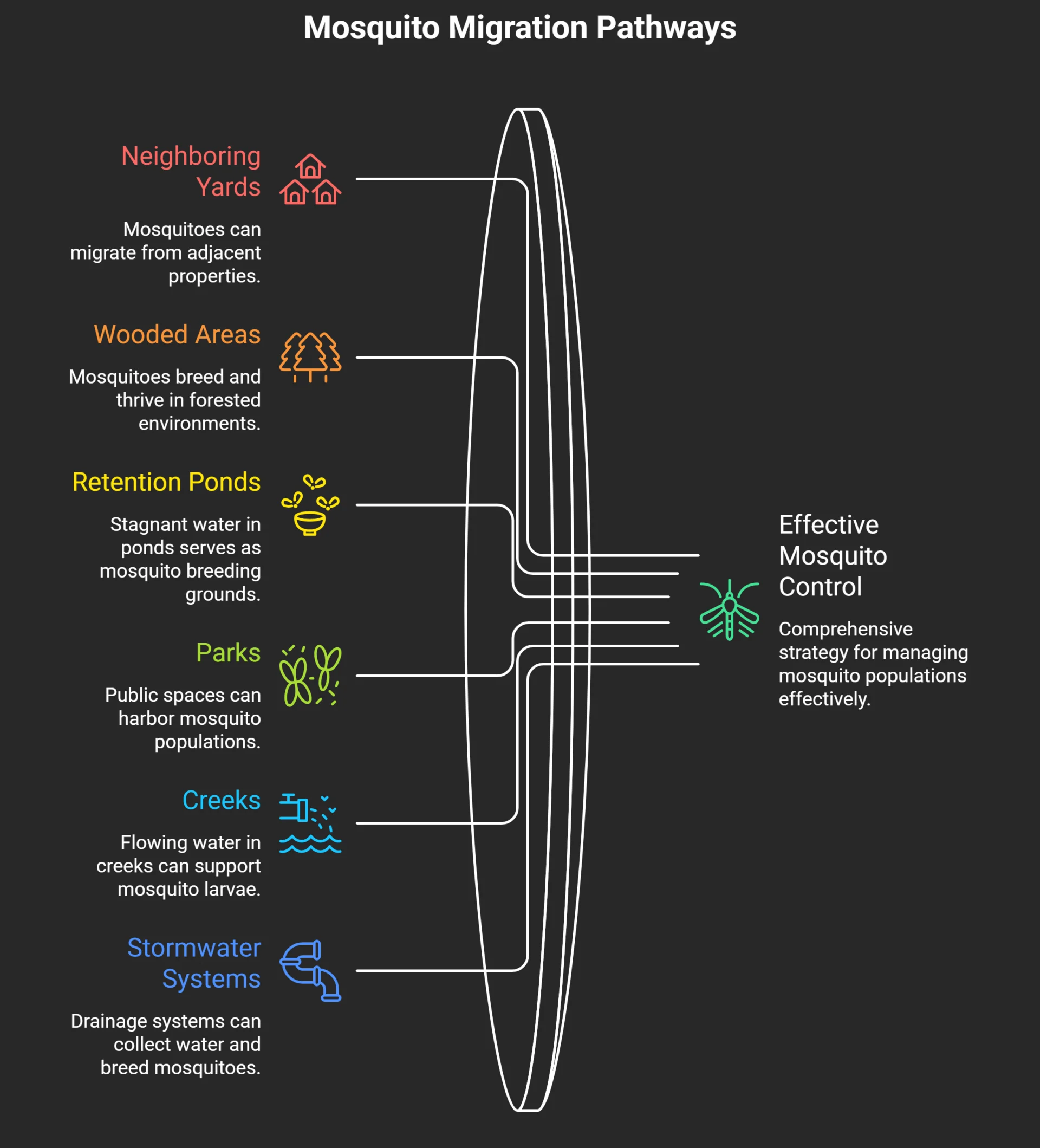
One of the most frustrating aspects of mosquito control is that mosquito populations are constantly changing. Even if you’ve done an excellent job eliminating breeding sites on your own property, mosquitoes can continue arriving from:
- Neighboring yards.
- Wooded areas.
- Retention ponds.
- Parks.
- Creeks.
- Stormwater drainage systems.
- Untreated properties nearby.
This is why mosquito management focuses on reducing mosquito pressure, rather than expecting complete elimination. Successful mosquito control is an ongoing process that combines habitat management, environmental awareness, and when appropriate, professionally applied seasonal treatments.
Need fast, reliable help? Our team is ready to assist you today.
How Zuckerman’s Approaches Mosquito Management
Because mosquitoes spend nearly their entire lives outdoors, successful mosquito management begins with understanding the property as a whole, not just the home itself.
At Zuckerman’s Pest Management, our approach focuses on identifying the conditions that allow mosquitoes to breed, rest, and remain active around your outdoor living spaces.
During an inspection, we evaluate factors such as:
- Dense landscape vegetation.
- Heavy shade.
- Standing water.
- Woodland borders.
- Nearby water sources.
- Outdoor gathering areas.
- Areas where mosquitoes are likely to rest during the day.
Rather than offering mosquito treatment as a stand-alone service, we believe the best protection comes from treating the property as a complete system.
For homeowners enrolled in our PestProtect 365 Home program, seasonal mosquito, flea, and tick treatments can be added to extend protection beyond the home and into the yard. This integrated approach helps reduce mosquito activity around patios, decks, play areas, and other outdoor spaces where families spend the most time.
Treatment schedules, seasonal timing, and warranty coverage vary depending on the specific service selected and environmental conditions. Additional information is available on our service pages and within your service agreement.
Conclusion
Mosquitoes are an unavoidable part of summer in Central Ohio, but they don’t have to prevent you from enjoying your backyard.
By understanding where mosquitoes breed, where they rest, and what attracts them to your property, homeowners can take simple, effective steps to reduce mosquito activity before it becomes overwhelming.
Eliminating standing water, maintaining healthy landscaping, protecting yourself during peak activity, and managing outdoor habitat all contribute to a more comfortable outdoor environment.
For homeowners looking for more complete protection, combining seasonal mosquito, flea, and tick treatments with a comprehensive home pest management program provides an additional layer of defense for the outdoor spaces where families gather, children play, and pets explore.
At Zuckerman’s Pest Management, our goal isn’t simply to reduce mosquitoes, it’s to help Central Ohio homeowners reclaim their yards through practical education, science-based recommendations, and long-term property protection.
Sources & References
This article was developed using information from recognized scientific and educational resources, including:
- Entomological Society of America (ESA)
- Centers for Disease Control and Prevention (CDC)
- Ohio State University Extension
- Ohio Department of Health (ODH)
- Ohio Department of Natural Resources (ODNR)
- United States Department of Agriculture (USDA)
- Purdue University Extension
- Penn State Extension
- National Pest Management Association (NPMA)
About the Author
Jerika Zuckerman, ACE is the Co-Owner of Zuckerman’s Pest Management, a family-owned pest and wildlife management company serving homeowners and businesses throughout Central Ohio.
As an Associate Certified Entomologist (ACE) credentialed by the Entomological Society of America (ESA), Jerika combines years of practical field and office experience with a passion for insect biology, Integrated Pest Management (IPM), and consumer education. Through the Zuckerman’s Pest & Wildlife Learning Library, she is committed to helping homeowners understand not just how to solve pest problems, but why those problems occur in the first place.
Need fast, reliable help? Our team is ready to assist you today.
Frequently Asked Questions
Why do mosquitoes bite some people more than others?
Mosquitoes locate hosts using several factors, including carbon dioxide, body heat, body odor, movement, and even clothing color. Some people naturally produce combinations of these cues that make them more attractive to mosquitoes.
Can mosquitoes breed in clean water?
Yes. Many mosquito species readily breed in clean rainwater collected in containers around the home. Dirty water is not required.
How much water does a mosquito need to breed?
Very little. Some species can complete development in surprisingly small amounts of standing water, making routine property inspections one of the most effective prevention strategies.
Why are mosquitoes worse after rain?
Rain fills containers, tree holes, clogged gutters, and other breeding sites with water. Within several days, those newly flooded areas can begin producing adult mosquitoes.
Do bug zappers control mosquitoes?
Generally, no. Most traditional bug zappers kill a wide variety of flying insects, many of which are actually beneficial. Research has shown that they have little overall impact on mosquito populations.
What attracts mosquitoes to my backyard?
Mosquitoes are attracted to standing water, shaded vegetation, humidity, nearby hosts, and areas protected from wind. Properties with dense landscaping or frequent wildlife activity often experience greater mosquito pressure.
Should my yard be treated for mosquitoes?
Properties with recurring mosquito activity often benefit from seasonal mosquito reduction treatments. Because mosquitoes spend nearly their entire lives outdoors, incorporating seasonal mosquito, flea, and tick treatments into a comprehensive PestProtect 365 Home program can help reduce mosquito activity where your family spends the most time enjoying the outdoors.