If you’ve lived in Ohio for any length of time, you’ve probably noticed something many homeowners have also observed over the past several years:
Ticks seem to be everywhere.
Whether you’re walking the dog around the neighborhood, working in the garden, hiking through a local park, or simply mowing your lawn, encounters with ticks have become increasingly common throughout Central Ohio.
While ticks have always been part of Ohio’s natural environment, they are no longer considered just a concern for hunters, hikers, or people spending time deep in the woods. Today, homeowners regularly find ticks in suburban neighborhoods, city parks, school playgrounds, backyard landscaping, and even on pets that rarely leave the yard.
Fortunately, finding a tick doesn’t mean your property is unsafe, nor should it keep you from enjoying your outdoor spaces.
Like most pests, understanding why ticks are there, where they live, and how they behave is the first step toward reducing your risk.
At Zuckerman’s Pest Management, we believe homeowners deserve practical, science-based information, not unnecessary fear. Ticks are an important public health concern, but they’re also predictable animals with specific habitat preferences and life cycles. Understanding those behaviors allows homeowners to make informed decisions that help protect both their families and their pets.
This guide serves as the cornerstone of the Ticks section within the Zuckerman’s Pest & Wildlife Learning Library. We’ll explain the most common tick species found in Central Ohio, why tick encounters are increasing, where ticks are commonly found, and practical ways to reduce tick activity around your property.
Need fast, reliable help? Our team is ready to assist you today.
Quick Facts About Ticks in Ohio
| Topic | Information |
|---|---|
| Primary Activity Season | March through November |
| Peak Activity | Spring through early summer, with another increase during fall for some species |
| Most Common Tick Species | American Dog Tick, Blacklegged (Deer) Tick, Lone Star Tick |
| Where Ticks Are Found | Wooded edges, tall grass, leaf litter, landscape beds, wildlife corridors, parks and yards |
| Do Ticks Jump or Fly? | No. Ticks wait on vegetation and attach to passing hosts. |
| Common Hosts | Deer, mice, rabbits, squirrels, birds, dogs, cats and people |
| Professional Yard Protection Available? | Yes. Seasonal mosquito, flea, and tick treatments can be added to our PestProtect 365 Home program to extend protection beyond the home and into your yard. |
What Exactly Is a Tick?
Although many people refer to ticks as insects, they actually belong to an entirely different group of animals.
Ticks are arachnids, making them close relatives of spiders, mites, and scorpions, not ants, mosquitoes, or beetles.
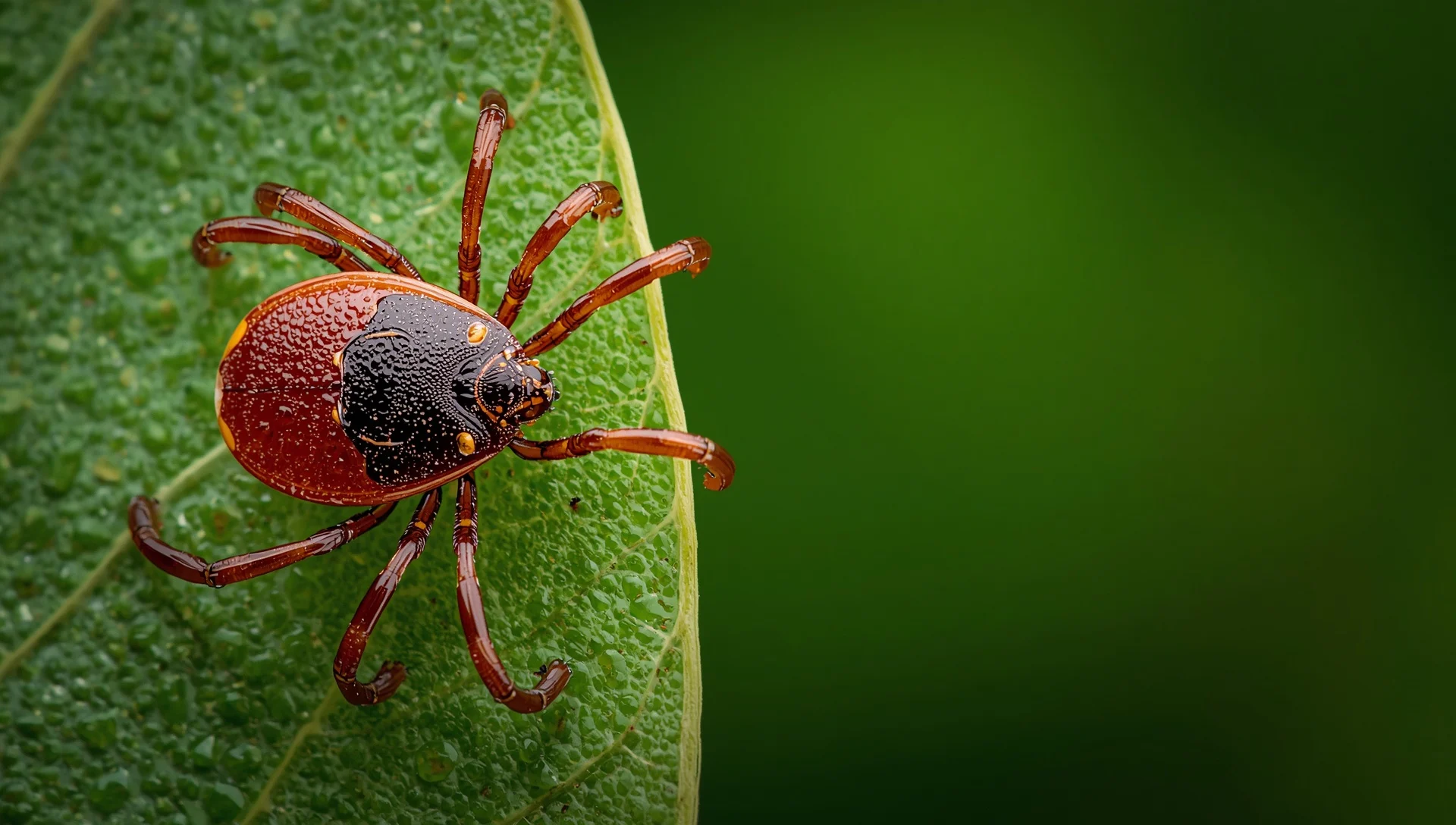
Adult ticks have eight legs, lack wings, and survive by feeding on the blood of animals during different stages of their life cycle.
Unlike mosquitoes, ticks don’t actively fly around searching for people.
Instead, they use an incredibly effective strategy called questing.
A tick climbs onto a blade of grass, a small shrub, or low vegetation and extends its front legs outward while waiting for a suitable host to brush past.
Once something makes contact, whether it’s a deer, dog, squirrel, rabbit, or person, the tick quickly grabs hold and begins searching for a suitable place to attach.
This is why most tick encounters occur after walking through:
- Tall grass
- Brushy areas
- Woodland edges
- Overgrown landscaping
- Leaf litter
- Naturalized areas around ponds, creeks, and wooded lots
Contrary to popular belief, ticks cannot jump.
They cannot fly.
And they don’t fall from trees onto unsuspecting people.
Nearly every tick encounter begins with brushing against vegetation where the tick has been patiently waiting.
Why Are Ticks Becoming More Common in Ohio?
This is one of the questions we hear most often, and it’s a good one.
Many longtime Ohio residents genuinely remember a time when finding a tick was relatively uncommon.
Today, that’s no longer the case.
Researchers throughout Ohio have documented significant increases in tick populations, expanding geographic ranges, and the establishment of species that were once rarely found in our state.
Several factors are believed to be contributing to this trend.
Wildlife Populations
White-tailed deer, wild turkeys, rabbits, mice, squirrels, coyotes, foxes, raccoons, opossums, and countless bird species all help transport ticks across the landscape.
As wildlife populations have expanded and adapted to suburban environments, ticks have naturally followed.
Changing Landscapes
Central Ohio has experienced tremendous residential growth over the past several decades.
Many neighborhoods now border wooded preserves, parks, green spaces, retention ponds, walking trails, and former agricultural land.
These transition zones create excellent habitat for both wildlife and ticks.
Favorable Habitat
Ticks thrive where they can remain cool and protected from drying out.
Leaf litter, dense shrubs, ornamental landscaping, woodland edges, brush piles, and tall grass all help retain moisture while providing excellent opportunities to encounter passing hosts.
Weather Patterns
Although Ohio still experiences cold winters, ticks are surprisingly resilient.
Mild winters, longer growing seasons, and favorable spring conditions may improve survival for some tick species while allowing activity to begin earlier in the year.
Tick Activity Is Increasing Across Central Ohio
For many homeowners, the increase in tick encounters isn’t just perception, it’s becoming a reality.
State agencies, universities, healthcare providers, veterinarians, and pest management professionals have all observed increasing reports of ticks throughout Ohio.
In addition to seeing more ticks, we’re also seeing more species than we did just a few decades ago.
Perhaps the best example is the Lone Star Tick, a species that historically occurred much farther south but is now firmly established throughout much of Ohio, including many counties in Central Ohio.
As tick populations continue to expand, homeowners should think about tick prevention the same way they think about smoke detectors or locking the doors at night, not because disaster is inevitable, but because simple preventative steps significantly reduce unnecessary risk.
Fortunately, there are many practical things homeowners can do to make their property less attractive to ticks, which we’ll discuss later in this guide.
Understanding the Tick Life Cycle
One reason ticks can be difficult to manage is that they spend the vast majority of their lives outdoors.
Most of the medically important tick species found in Ohio progress through four distinct life stages:
- Egg
- Larva
- Nymph
- Adult
Each stage requires a blood meal before the tick can continue developing.
Depending on the species, completing this life cycle may take two to three years.
Because different life stages feed on different animals, tick populations are closely connected to the wildlife living around our homes.
This also explains why simply treating visible ticks rarely provides long-term results.
Successful tick management involves understanding the entire environment, not just the individual tick you happen to find.
Common Tick Species Found in Central Ohio
Although dozens of tick species are found throughout North America, homeowners in Central Ohio are most likely to encounter four primary species. Each has its own preferred habitat, host animals, seasonal activity, and level of concern.
Fortunately, you don’t need to become a tick expert to protect yourself. Simply recognizing the most common species, and understanding where they live, can go a long way toward reducing unwanted encounters.
American Dog Tick (Dermacentor variabilis)
The American dog tick is one of the largest and most recognizable tick species found in Ohio. Adults are reddish-brown with distinctive light gray or silver markings across their back, making them easier to identify than some of Ohio’s smaller tick species.
Despite the name, these ticks don’t feed exclusively on dogs. They readily attach to many mammals, including people.
American dog ticks are commonly found in:
- Tall grass
- Meadows
- Roadside vegetation
- Parks
- Walking trails
- Woodland edges
- Overgrown fields
Unlike blacklegged ticks, American dog ticks generally prefer more open, sunny environments rather than dense forests.
Because of their larger size, homeowners often notice them before they become attached, giving them an opportunity to remove the tick before it begins feeding.
Blacklegged Tick / Deer Tick (Ixodes scapularis)
The blacklegged tick, more commonly called the deer tick, has become one of the most important tick species in Ohio.
Adults are considerably smaller than American dog ticks, while immature nymphs are exceptionally tiny, often no larger than a poppy seed. Their small size makes them much easier to overlook during routine tick checks.
Blacklegged ticks prefer:
- Wooded areas
- Leaf litter
- Forest edges
- Brushy habitat
- Moist shaded landscapes
- Wildlife travel corridors
Homeowners frequently encounter them while gardening, stacking firewood, hiking, or working near wooded portions of their property.
Because they thrive in humid environments, properties bordering forests or natural green spaces often experience greater blacklegged tick activity than more open suburban lots.
Lone Star Tick (Amblyomma americanum)
One of the biggest changes Ohio homeowners should be aware of is the rapid expansion of the Lone Star Tick.
Historically, this species was primarily found throughout the southeastern United States. Today, it is well established across much of Ohio, including many counties throughout Central Ohio.
Adult females are easily recognized by the single white or silver spot located near the center of their back, the feature responsible for the name “lone star tick.”
Unlike many other tick species that simply wait for a host to brush past, lone star ticks are often more active. They readily detect movement, body heat, and carbon dioxide and may move toward nearby people or animals after sensing their presence.
Although this behavior sometimes makes them seem unusually aggressive, they’re simply highly efficient at locating hosts.
Why Is the Lone Star Tick Receiving So Much Attention?
Beyond its expanding range, the lone star tick has gained national attention because it has been associated with Alpha-gal Syndrome (AGS).
Alpha-gal Syndrome is not an infection, it’s an allergic condition that may develop in some individuals after being bitten by a lone star tick.
The bite can trigger an immune response to a naturally occurring sugar molecule called alpha-gal, which is found in most mammals.
For affected individuals, eating mammalian meats such as:
- Beef
- Pork
- Lamb
- Venison
may trigger a delayed allergic reaction several hours after eating.
Some individuals may also react to certain mammal-derived products, medications, or gelatin-containing foods.
While Alpha-gal Syndrome remains relatively uncommon, awareness has increased dramatically as lone star ticks have continued expanding into Ohio.
The good news is that the same prevention strategies used to reduce exposure to other tick species also help reduce encounters with lone star ticks.
Brown Dog Tick (Rhipicephalus sanguineus)
Brown dog ticks are somewhat unique among Ohio’s tick species because they are capable of completing their entire life cycle indoors.
Rather than relying on wildlife, they primarily feed on dogs and are most commonly associated with:
- Homes
- Kennels
- Boarding facilities
- Veterinary clinics
- Animal shelters
Although brown dog tick infestations are far less common than encounters with outdoor tick species, they occasionally become indoor pest problems requiring professional management.
Fortunately, most homeowners will never encounter them unless an established infestation develops.
Where Are Ticks Commonly Found?
One of the biggest misconceptions about ticks is that they’re found only deep in the woods.
In reality, many tick encounters occur surprisingly close to home.
Common tick habitat includes:
- Woodland edges
- Tall grass
- Landscape beds
- Ornamental shrubs
- Groundcover plantings
- Leaf litter
- Brush piles
- Wood piles
- Walking trails
- Fence rows
- Retention ponds
- Creek corridors
- Areas frequently visited by deer or other wildlife
Even well-maintained neighborhoods may provide excellent tick habitat if they border parks, forests, or undeveloped land.
This is one reason homeowners who rarely hike or camp may still discover ticks on themselves or their pets after spending time in their own backyard.
Tick Season in Central Ohio
Although many people think of ticks as strictly a summer problem, they can remain active for much of the year whenever temperatures are favorable.
Early Spring
As temperatures begin warming, overwintering adult ticks become active.
Spring yard cleanup, gardening, and landscaping often bring homeowners into contact with ticks that have been inactive during the winter.
Late Spring
Tick activity increases rapidly.
Immature nymphs begin emerging and become one of the most commonly encountered life stages.
Because nymphs are so small, many people never realize they’ve been bitten.
Summer
Ticks remain active throughout the summer, particularly in shaded, humid environments.
Outdoor recreation, camping, gardening, children’s activities, and pet exercise all increase opportunities for exposure.
Fall
Several species, including blacklegged ticks, experience another noticeable increase in activity during the fall.
Many homeowners mistakenly believe tick season ends after Labor Day, but autumn remains one of the most important times to continue performing routine tick checks.
Winter
While prolonged freezing weather greatly reduces activity, ticks don’t simply disappear.
On mild winter days, particularly when temperatures rise above freezing, some ticks may still become active.
Can Ticks Live in My Yard?
Absolutely.
In fact, many homeowners who never visit wooded areas still encounter ticks because suitable habitat exists right on their property.
Factors that commonly increase tick activity include:
- Dense vegetation
- Heavy shade
- Woodland borders
- Frequent wildlife activity
- Leaf accumulation
- Brush piles
- Moist environments
- Tall ornamental grasses
This doesn’t mean every yard with trees has a serious tick problem.
It simply means thoughtful landscape management can play an important role in reducing tick habitat around the areas where your family spends the most time.
ACE Insight — With Jerika Zuckerman, Associate Certified Entomologist (ACE)
One of the biggest changes I’ve observed during my career isn’t just finding more ticks, it’s finding them in places homeowners never expected. We’re routinely seeing tick activity in suburban neighborhoods, landscaped backyards, and community green spaces where people once assumed the risk was minimal. Fortunately, understanding tick habitat gives homeowners a real advantage. A few simple prevention strategies, combined with regular tick checks and thoughtful landscape maintenance, can significantly reduce unnecessary exposure.
Protecting Yourself, Your Family, and Your Pets
The good news about ticks is that while they’re becoming more common throughout Ohio, there are many simple and effective ways to reduce your risk of encountering them.
No single strategy will eliminate every tick from the environment, but combining several preventative measures can make a significant difference for your family, your pets, and your property.
Dress for the Environment
When spending time in wooded areas, parks, tall grass, or heavy vegetation, wearing the appropriate clothing can help reduce tick exposure.
Consider wearing:
- Long pants
- Closed-toe shoes or boots
- Long sleeves when practical
- Light-colored clothing, which makes ticks easier to spot
If you’re working in dense vegetation for an extended period, tucking pant legs into socks or boots can provide additional protection.
Stay on Maintained Trails
Whether you’re hiking through one of Central Ohio’s Metro Parks or walking a neighborhood nature trail, staying on maintained paths reduces the chance of brushing against vegetation where ticks are waiting for a host.
Remember, ticks don’t jump or fly, they rely on contact with vegetation to attach to people or animals.
Perform Routine Tick Checks
One of the easiest, and most effective, ways to reduce the risk of tick-borne illness is to check yourself after spending time outdoors.
Pay close attention to:
- Behind the knees
- Under the arms
- Around the waist
- Behind the ears
- Along the hairline
- Around the ankles
- Behind the neck
Children should also be checked after playing outside, especially if they’ve been exploring wooded areas, parks, or tall grass.
Don’t Forget Your Pets
Dogs are particularly susceptible to picking up ticks while exploring the yard or going for walks.
Even if your pet receives veterinarian-recommended tick prevention, it’s still a good idea to perform routine inspections after spending time outdoors.
Checking around the ears, neck, chest, legs, and between the toes can help identify ticks before they remain attached for extended periods.
Always consult your veterinarian regarding the most appropriate flea and tick prevention products for your pets.
Reduce Tick Habitat Around Your Home
You don’t have to completely redesign your landscape to make it less attractive to ticks.
Simple maintenance practices can make a meaningful difference.
Consider:
- Mowing grass regularly.
- Removing excessive leaf litter.
- Trimming overgrown vegetation.
- Eliminating unnecessary brush piles.
- Keeping children’s play equipment away from wooded edges whenever practical.
- Creating separation between wooded areas and frequently used portions of the yard.
While these measures won’t eliminate every tick, they can reduce the number of suitable hiding places immediately around your home.
How to Remove a Tick Properly
Discovering an attached tick can certainly be unsettling, but removing it correctly is important.
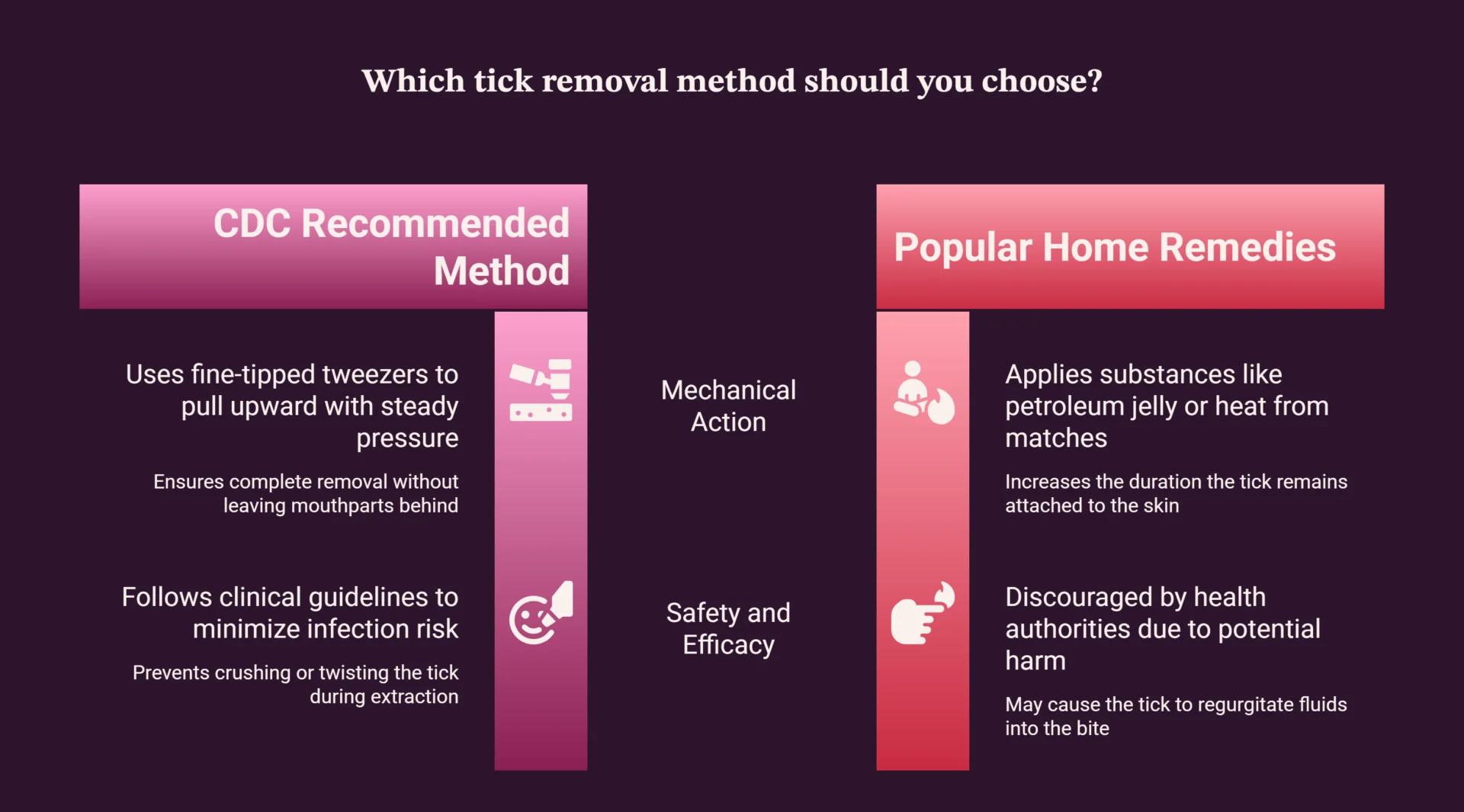
The Centers for Disease Control and Prevention (CDC) recommends:
- Use clean, fine-tipped tweezers.
- Grasp the tick as close to the skin as possible.
- Pull upward with slow, steady pressure.
- Avoid twisting or crushing the tick.
- Clean the bite area thoroughly with soap and water or an appropriate antiseptic.
Avoid popular home remedies such as:
- Petroleum jelly
- Nail polish
- Essential oils
- Heat from matches or lighters
These methods are not recommended and may actually increase the amount of time the tick remains attached.
If you develop concerning symptoms following a tick bite, consult your healthcare provider.
Need fast, reliable help? Our team is ready to assist you today.
How Zuckerman’s Approaches Tick Management
Unlike many household pests, ticks spend the majority of their lives outdoors.
That means effective tick management extends beyond treating the home itself.
At Zuckerman’s Pest Management, we take a property-wide approach by evaluating the environmental conditions that support tick activity around your home.
During an inspection, we look for factors such as:
- Woodland borders.
- Dense vegetation.
- Wildlife travel corridors.
- Heavy leaf litter.
- Moist, shaded areas.
- Landscaping that provides favorable tick habitat.
Because ticks are outdoor pests, reducing activity where your family spends time is just as important as protecting the structure itself.
For homeowners who want more comprehensive protection, seasonal mosquito, flea, and tick treatments can be added to our PestProtect 365 Home program. This combination extends protection beyond the home and into the yard, helping reduce tick activity in the outdoor spaces where children play, pets roam, and families relax.
As with all of our services, treatment recommendations are tailored to your property. Warranty coverage and service schedules vary based on the specific program selected, environmental conditions, and the pest being managed. Additional details are available in your service agreement and on the individual service pages throughout our website.
Conclusion
Ticks have become an increasingly common part of life in Central Ohio, but that doesn’t mean they should prevent you from enjoying your property or spending time outdoors.
Understanding where ticks live, how they find hosts, and what attracts them to certain environments allows homeowners to make informed decisions that significantly reduce their risk of exposure.
Simple practices like performing routine tick checks, maintaining your landscape, protecting pets, and reducing suitable habitat around the home all contribute to a safer outdoor environment.
For properties with persistent tick activity, combining seasonal mosquito, flea, and tick treatments with a comprehensive home pest management program can provide an additional layer of protection for the areas where your family spends the most time.
At Zuckerman’s Pest Management, our goal is simple: provide honest, science-based recommendations that help Central Ohio homeowners protect their homes, families, and pets, without relying on fear or one-size-fits-all solutions.
Sources & References
This article was developed using information from recognized scientific and educational resources, including:
- Entomological Society of America (ESA)
- Centers for Disease Control and Prevention (CDC)
- Ohio Department of Health (ODH)
- Ohio Department of Natural Resources (ODNR)
- Ohio State University Extension
- Penn State Extension
- Purdue University Extension
- University of Kentucky Entomology
- United States Department of Agriculture (USDA)
About the Author
Jerika Zuckerman, ACE is the Co-Owner of Zuckerman’s Pest Management, a family-owned pest and wildlife management company serving homeowners and businesses throughout Central Ohio.
As an Associate Certified Entomologist (ACE) credentialed by the Entomological Society of America (ESA), Jerika combines years of practical field and office experience with a passion for insect biology, Integrated Pest Management (IPM), and consumer education. Through the Zuckerman’s Pest & Wildlife Learning Library, she is committed to helping homeowners make informed, science-based decisions about protecting their homes, families, pets, and properties.
Need fast, reliable help? Our team is ready to assist you today.
Frequently Asked Questions
Do ticks jump or fly?
No.
Ticks cannot jump or fly. They climb onto vegetation and wait for a person or animal to brush past—a behavior known as questing.
Are ticks only found in wooded areas?
No.
Ticks are commonly found in suburban neighborhoods, landscaped yards, parks, ornamental plantings, wooded property edges, and anywhere wildlife frequently travels.
Can I get ticks in my own backyard?
Absolutely.
Many homeowners encounter ticks without ever leaving their property, particularly if their yard borders woods, natural areas, parks, or undeveloped land.
Why are there more ticks in Ohio now?
Researchers believe several factors are contributing to increasing tick activity, including expanding wildlife populations, suburban development near natural habitats, favorable environmental conditions, and the continued spread of species such as the lone star tick.
Does mowing my lawn get rid of ticks?
Not entirely.
Regular mowing helps reduce habitat, but ticks often remain in landscape beds, wooded edges, leaf litter, and shaded vegetation.
Is every tick dangerous?
No.
Most tick bites do not result in disease.
However, because several tick species found in Ohio are capable of transmitting illnesses, it’s important to remove attached ticks promptly and monitor for any concerning symptoms.
What is Alpha-gal Syndrome?
Alpha-gal Syndrome is an uncommon allergic condition associated with bites from the lone star tick. In some individuals, it may trigger an allergy to a naturally occurring sugar found in mammalian meats such as beef, pork, lamb, and venison. Anyone experiencing symptoms should seek evaluation from a qualified healthcare provider.
Should I have my yard treated for ticks?
Properties with recurring tick activity, wooded borders, dense landscaping, or heavy wildlife traffic may benefit from seasonal tick reduction services.